
Troye Sivan’s “Party” and the Liberating Power of the Dance Floor
When a pop artist fully commits to a vision, the result can bridge the gap between sound and spectacle. Troye Sivan’s music video for “Party,” the hypnotic second single from She’s the Best, does exactly that—an expression of creative independence that uses the familiar language of nightlife to explore something deeper.
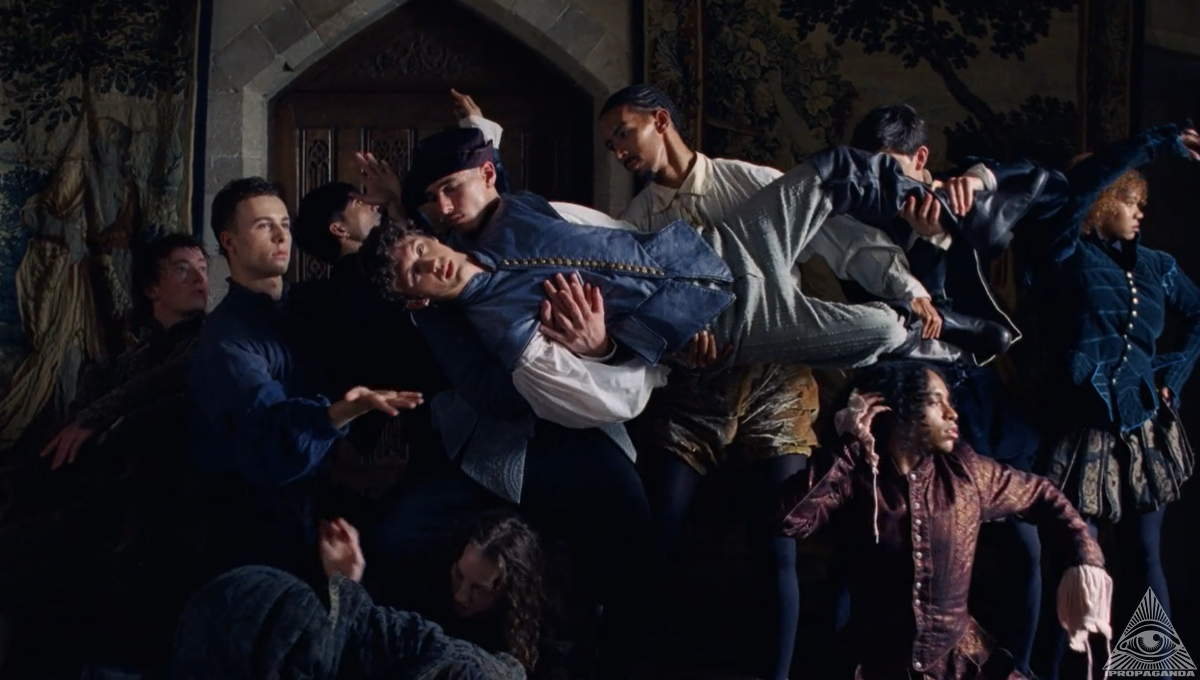
Opening on a misty, muddy medieval battlefield, the video immediately subverts expectations of a typical club anthem. Rather than placing us in a strobe-lit warehouse, director Gordon von Steiner transports us to a castle in Berkeley, England. Sivan, clad in armor, returns from conquest to partake in a bacchanalia of elaborate choreography, historical corsets and uninhibited queer joy.
Through its striking visuals and rhythmic house-pop production, “Party” becomes a meditation on the sacredness of nightlife, the importance of queer lineage and the independence that can be found on the dance floor.
The Sacred Space of the Dance Floor
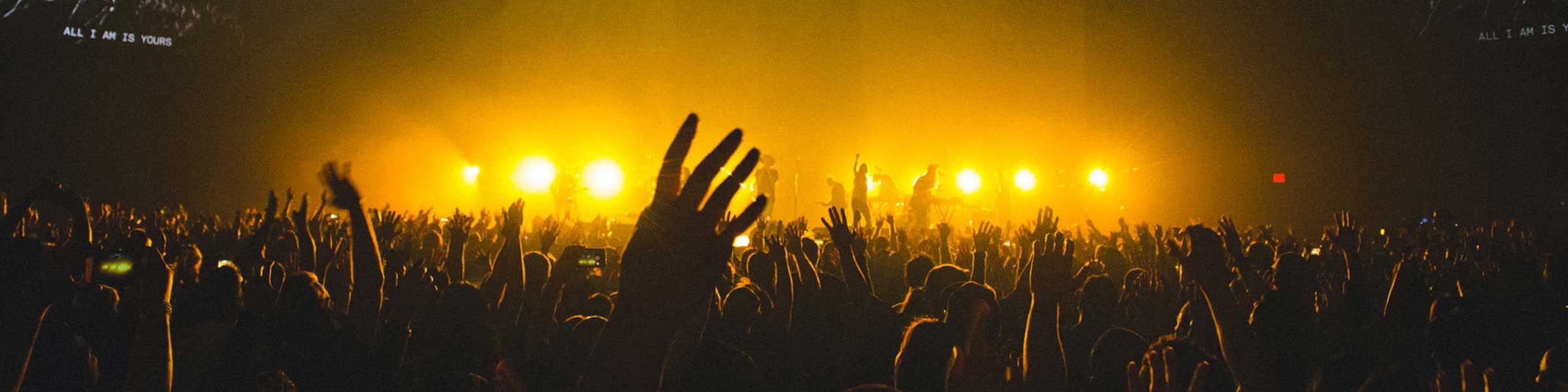
At its core, “Party” is an ode to the cyclical rhythm of a weekend spent moving from location to location. Sivan captures the euphoria of losing oneself in the crowd—a feeling that can carry a particularly specific weight within LGBTQ+ communities.
As Sivan has noted regarding the track, nightlife can be one of the first spaces where a queer person finds themselves in a room where they aren't the minority. In that context, partying becomes more than weekend activity. It can be formative, liberating and even sacred.
By staging the video centuries in the past, Sivan suggests that the desire to let loose is an enduring human impulse. Whether in a contemporary club, a Melbourne bush doof or a medieval castle, the search for a place to belong—and the freedom that can come with finding it—feels timeless.
Hypnotic Repetition and Defiant Structure
Musically, Sivan leans into a different kind of creative independence, stepping away from the traditional verse-chorus structure of radio pop in favor of something more repetitive and experimental. “Party” is built around a pulsing sample of Madonna’s 2000 anthem “Music,” anchoring the track in an established lineage of dance-pop.
Using sprechgesang—talk-singing—and a repetitive loop that moves through different party locations, Sivan mimics the physical experience of hearing dance music where it is meant to live: on the dance floor.
The repetition becomes a trance, mirroring the sensation of a night with no definitive beginning or end. Rather than forcing the track into a conventional pop structure, Sivan allows repetition itself to become the organizing principle. Pop becomes less a rigid formula than an experimental playground.
Queer Lineage as a Catalyst for Independence
Perhaps the most resonant element of “Party” arrives before the celebration even begins: its opening sequence is narrated by Sir Ian McKellen.
The inclusion of McKellen gives the video’s extravagant camp a generational dimension. Sivan first worked with McKellen at age 14 in a stage production of Waiting for Godot. For a young Sivan approaching his own coming out, working alongside an openly gay man who was successful, proud and publicly himself offered a visible example of another possibility.
By inviting McKellen to introduce this vision of a queer medieval rave, Sivan connects generations without allowing nostalgia to overwhelm the present.
It also complicates the idea of independence.
Independence does not always mean standing entirely alone. Sometimes it is made possible by people who came before—those who created room, visibility and precedent for someone else to move differently.
Here, lineage isn’t the opposite of independence. It becomes one of its foundations.
Finding Freedom in the Crowd
With “Party,” Sivan isn’t simply participating in contemporary pop spectacle. Beneath the historical costumes, sweaty choreography and even a brief appearance by a live pig is an argument about finding oneself through community.
That apparent contradiction is what makes the video interesting.
Individual freedom is being discovered in a crowd.
Sivan’s creative independence isn’t expressed by withdrawing from other people, but by constructing a world in which individuality, lineage, pleasure and collective experience can coexist.
The dance floor becomes sacred not because it removes us from the world, but because—for a few hours—it can create another version of it.
And sometimes, finding your own space begins by finding the people willing to occupy it with you.
KEEP THE CONVERSATION GOING.
Join the ipropaganda mailing list for new stories on music, art, culture and the ideas moving through them. Use the signup tab on this page.