
Not a Revival, a Reappearance
Music Without an Expiration Date
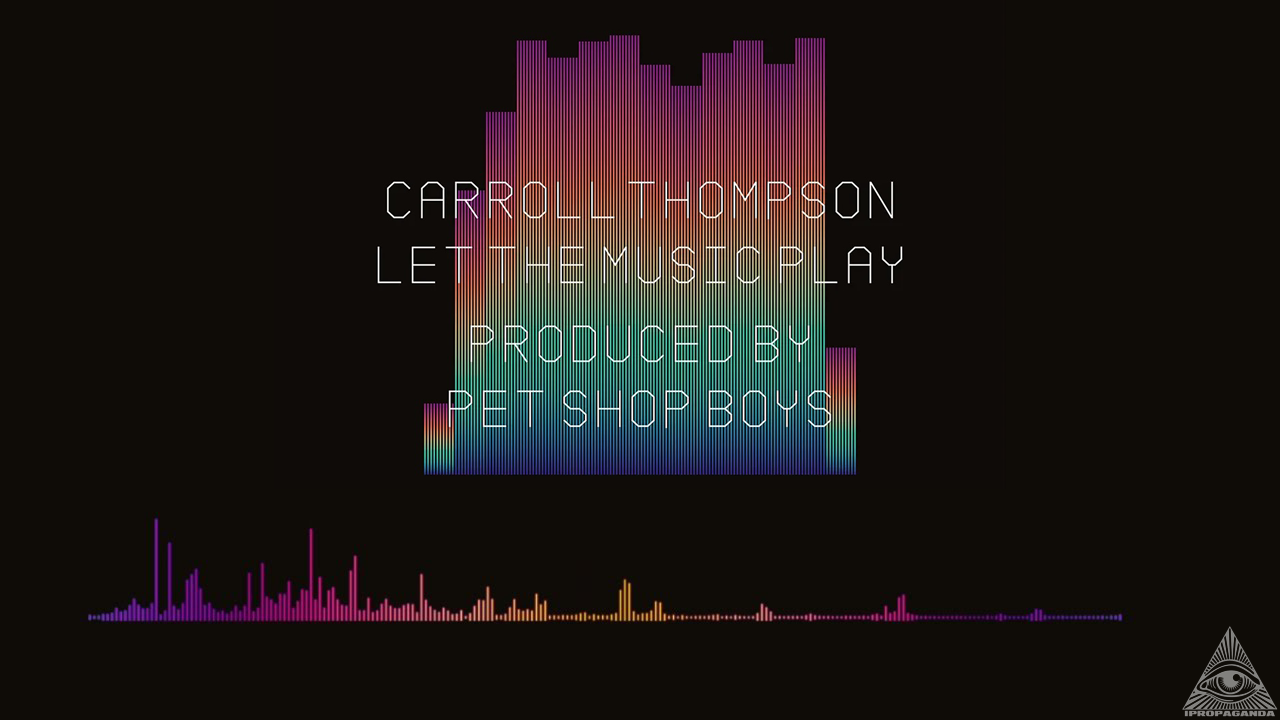
Carroll Thompson’s “Let The Music Play” is one of those rare recordings that quietly disproves the myth that music belongs to a single era. First released in the early 1990s and resurfacing again for contemporary listeners, the track exists in a liminal space—between genres, between decades, and between cultural worlds that rarely meet with such grace.
A Song in the Shadow of Cinema
Originally appearing on The Crying Game soundtrack (1992), Thompson’s version arrived wrapped in the film’s atmosphere of emotional ambiguity and nocturnal introspection. The soundtrack itself was a cultural artifact—sensual, political, unsettling, and deeply human—and Thompson’s contribution fit seamlessly into that mood. Her voice, rooted in lovers rock and soul, doesn’t chase the dancefloor in the way the original did; instead, it floats above it, intimate and assured, carrying a quiet authority.
The Pet Shop Boys’ Quiet Precision
Crucial to the track’s enduring power is the involvement of Pet Shop Boys. Neil Tennant and Chris Lowe bring their signature restraint to the production—elegant synth lines, controlled emotional tension, and an understanding that space can be as expressive as sound. This isn’t excess or nostalgia-driven retrofitting; it’s refinement. The Pet Shop Boys don’t overwrite Thompson’s presence—they frame it, allowing her voice to remain the emotional anchor while subtly recontextualizing the song within early-’90s electronic sophistication.
From Freestyle Anthem to Emotional Translation
It’s important to acknowledge that “Let The Music Play” is itself a reinterpretation—a cover of Shannon’s 1983 freestyle classic, a defining anthem of early club culture. Where Shannon’s version is urgent, bright, and driven by the ecstatic pulse of the dancefloor, Thompson’s reading is more reflective, almost meditative. It’s the same song, but viewed from a different emotional altitude. This isn’t revisionism; it’s translation—taking a track born in the heat of the club and letting it breathe in a cinematic, adult, and emotionally complex environment.
When Reinterpretation Becomes Preservation
And that’s where the song’s modern relevance truly emerges. Thompson’s version reminds us that what is old isn’t always old—it often simply waits for a new context to reveal another layer of meaning. In a time when culture is obsessed with novelty, “Let The Music Play” stands as a quiet rebuke. It shows how reinterpretation, when done with respect and intention, can extend a song’s life rather than dilute it.
The Present Tense of a Past Recording
Hearing the track today, it doesn’t feel like a relic or a revival. It feels present. It exists comfortably in a contemporary listening space where boundaries between past and present, club and cinema, pop and soul are increasingly porous. Carroll Thompson’s performance doesn’t ask to be rediscovered—it simply reminds us that great music never left. It just learned how to speak differently.