What happens when the courts redraw power and Black Americans are told—again—to trust the process?
--------------------------------
There is a particular kind of violence America prefers.
Not the spectacular kind.
Not the violence that leaves photographs too difficult for textbooks to fully absorb.
No dogs.
No hoses.
No mobs gathered beneath courthouse steps.
Just maps.
Court opinions.
Legislative language.
The slow, antiseptic choreography of erasure disguised as governance.
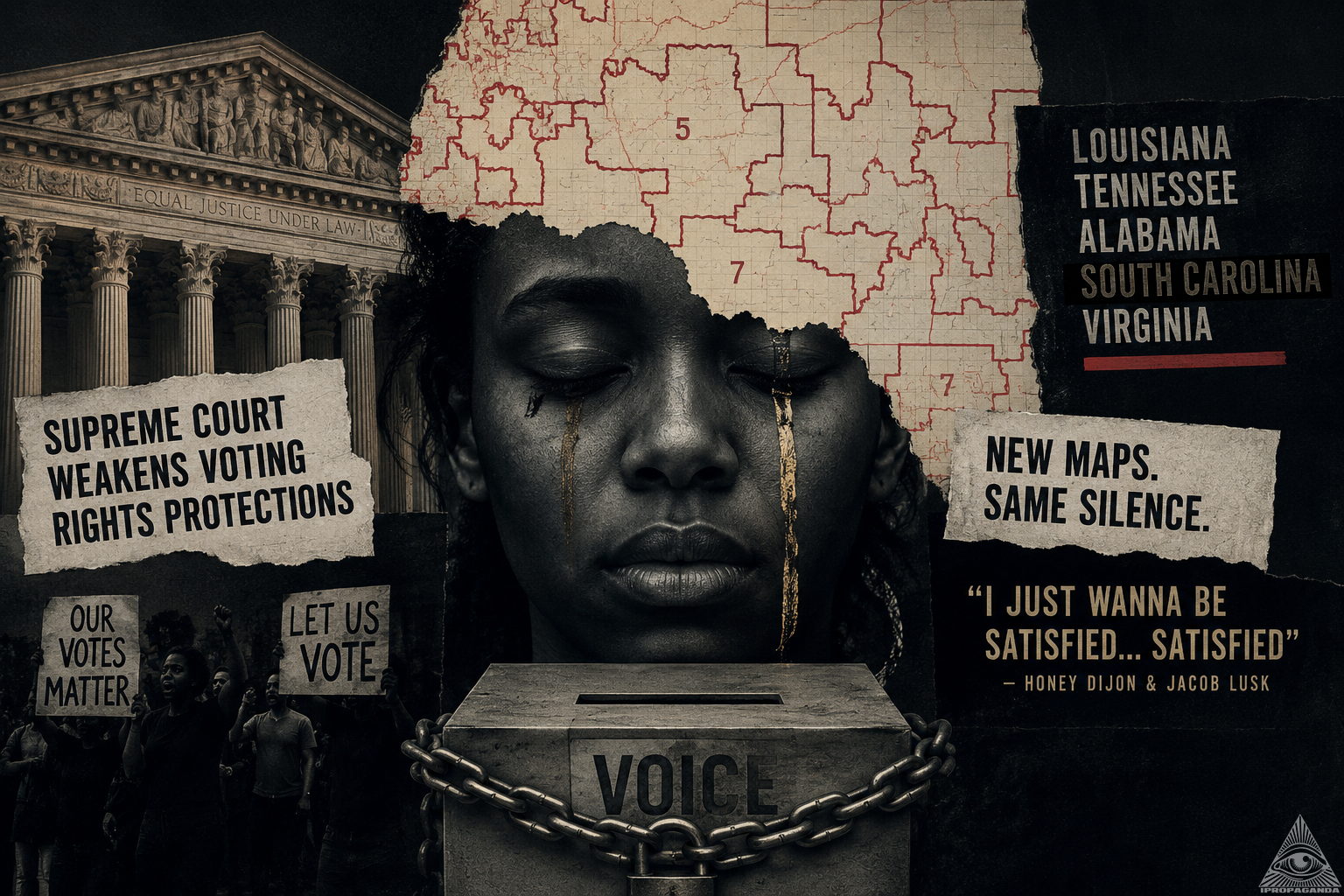
This past few week, the U.S. Supreme Court once again signaled how precarious Black political power remains in America—particularly through rulings around redistricting and voting rights that continue narrowing pathways for communities to challenge racial vote dilution. Across states like Louisiana, Alabama, Tennessee, South Carolina, and reverberations in Virginia, something familiar is taking shape: a political architecture increasingly capable of muting Black electoral influence while insisting democracy remains intact.
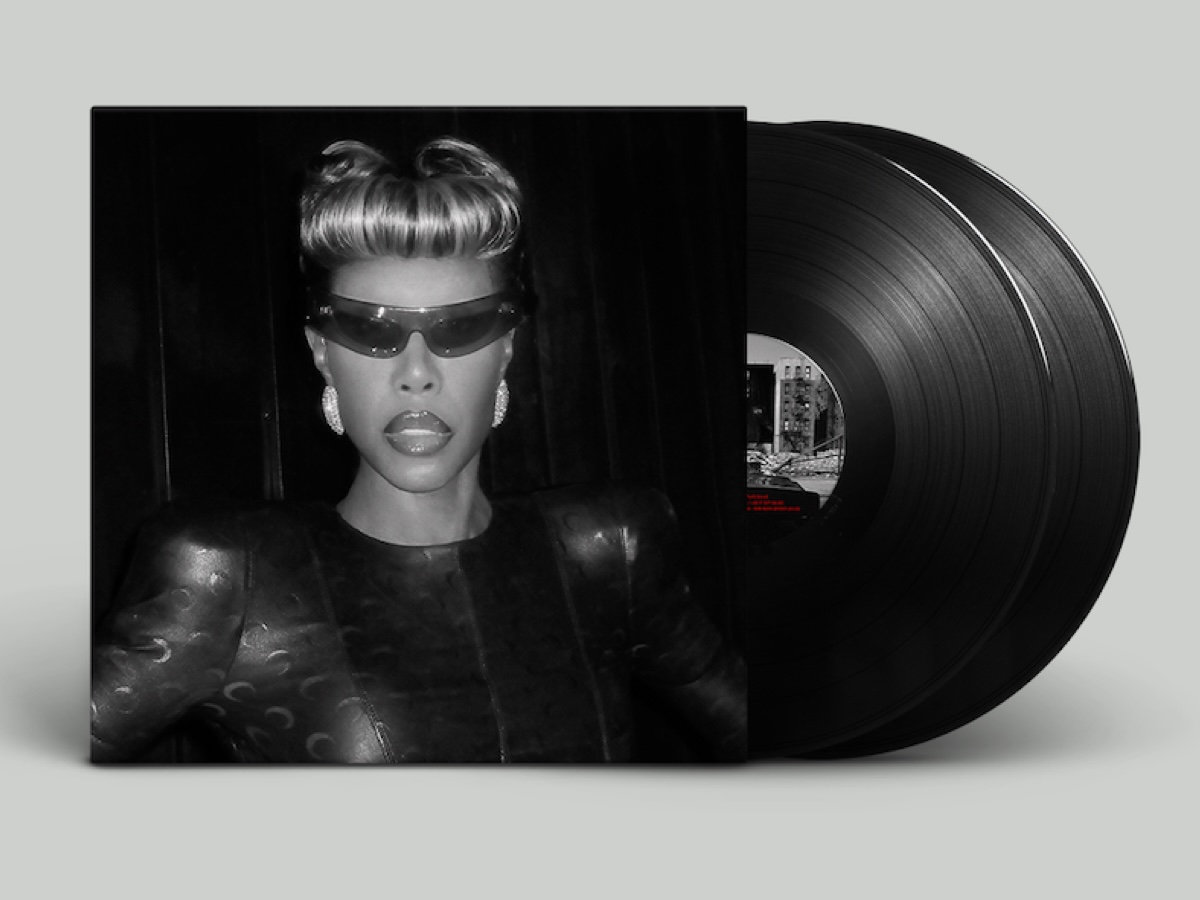
And somewhere in the middle of all this, Honey Dijon and Jacob Lusk’s Satisfied lands differently.
Not as escape.
Not as soundtrack.
As indictment.
Because beneath its aching repetition sits a question America never seems prepared to answer:
How exactly are Black citizens supposed to feel satisfied in a democracy still negotiating whether their political voice deserves protection?
For generations, Black Americans have been asked to believe in systems that repeatedly redraw the boundaries of their participation.
After Reconstruction came terror.
After terror came Jim Crow.
After Jim Crow came redlining.
After redlining came mass incarceration.
And after the promises of the Civil Rights Movement came something more sophisticated:
administrative disenfranchisement.
A democracy clever enough to understand that exclusion no longer needs spectacle.
Sometimes all it takes is a district line.
A procedural ruling.
A court deciding that proving racial harm must somehow become harder than the harm itself.
Tennessee’s aggressive congressional restructuring affecting Black political representation. Louisiana’s endless legal battles over majority-Black districts. Alabama’s resistance after federal courts ordered fairer maps. South Carolina defending congressional lines critics tried but failed for NOW!, to intentionally dilute Black voting power. Virginia reminding us that judicial decisions increasingly shape political legitimacy itself.
Each case is legally distinct.
Collectively, however, they tell a story.
A story Black Americans know too well.
The rules always seem to change precisely when power becomes possible.
And this is where Satisfied becomes unexpectedly devastating.
The song never screams.
It aches.
It circles longing.
A desire unmet.
Recognition deferred.
Something essential forever just beyond reach.
Listen to it now against the backdrop of courts narrowing voting protections and legislatures weaponizing legal ambiguity, and it stops sounding romantic. It begins to sound democratic.
Like a people exhausted from carrying belief longer than the nation has carried accountability.
Because democracy, at its core, is supposed to be participatory trust.
But trust requires evidence.
And Black communities have spent generations watching institutions celebrate their resilience while repeatedly recalculating the value of their political presence.
America loves Black turnout when it confirms national mythology.
Less so when that turnout threatens existing arrangements of power.
What makes this moment dangerous is not merely the rulings themselves.
It is the normalization.
The quietness.
The insistence that procedural violence somehow hurts less because it arrives dressed in legal language.
That there is nothing extraordinary about courts weakening protections once considered foundational to representation.
That communities should simply adjust.
Adapt.
Wait.
Again.
But there is a limit to what a democracy can ask people to endure while still calling itself representative.
Because at some point, “trust the process” becomes indistinguishable from accept your diminishment.
And perhaps that is why Satisfied lingers.
Why it feels strangely unbearable right now.
Its emotional gravity mirrors something larger than heartbreak.
It sounds like a country asking people to keep believing while quietly editing the terms of belonging.
A nation humming democratic hymns while redrawing the choir.
The cruelest thing America keeps asking of Black citizens is patience.
Patience with institutions.
Patience with courts.
Patience with legislatures.
Patience with incrementalism.
Patience with democracy’s selective memory.
But history teaches something else:
Black political voice has never expanded because power suddenly found morality.
It expanded because people organized, resisted, litigated, marched, voted, documented, survived, and demanded the nation become more honest than it wanted to be.
Which leaves us here.
In a democracy increasingly comfortable mistaking procedure for justice.
In states increasingly willing to test how much representation can be reduced before outrage becomes exhaustion.
In a country wondering why trust keeps eroding while participation itself grows harder to protect.
And still the question echoes:
Who exactly is supposed to feel satisfied?
Because democracy cannot survive as performance.
And no people should be asked to sing along while the architecture of their political voice is quietly dismantled.