
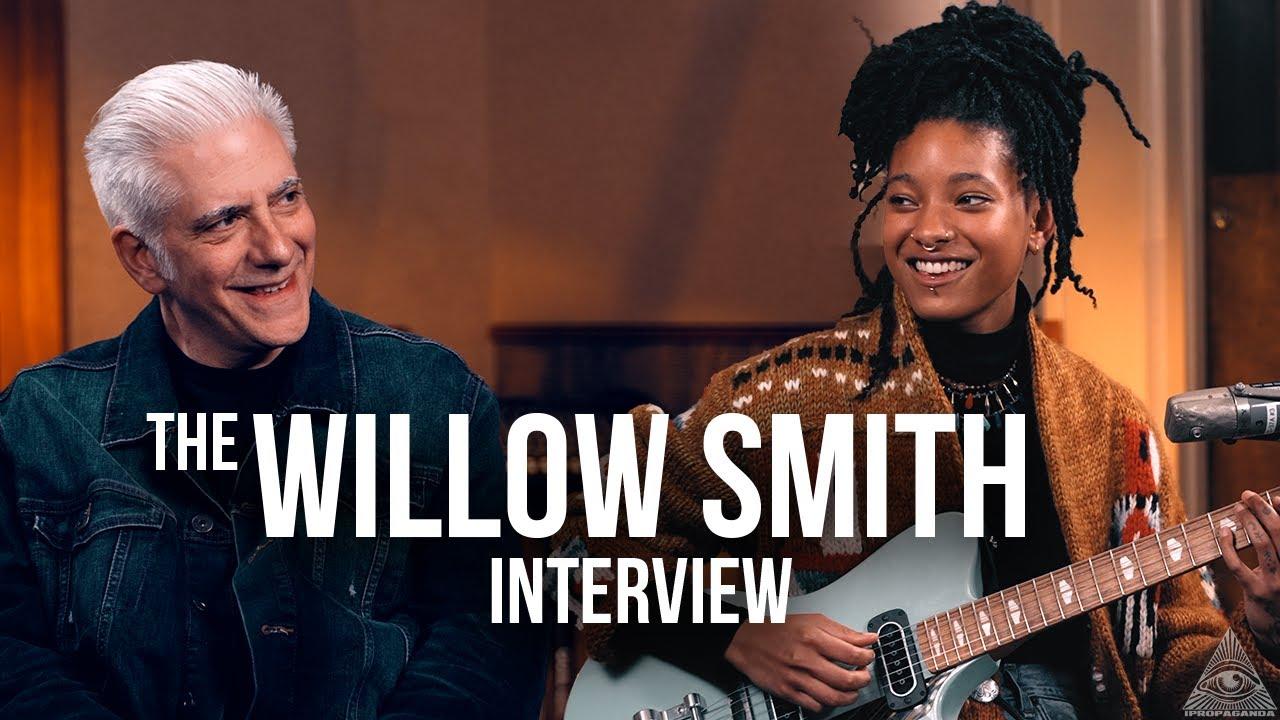
“Finding the Spot”: An Insightful Recap of Willow’s deep-dive interview
Willow walks into this conversation with the calm confidence of someone who has already lived a few artistic lives—and is busy building the next one. Over the hour, she pulls apart how her newest era came together, what broke it open, and why the craft matters as much as the feeling. Below is a clear, readable recap you can skim or sink into—organized by themes she kept returning to.
A snowball of inspiration after Empathogen
Fresh off releasing Empathogen on May 3, 2024, Willow explains that she usually takes a breather after an album. Not this time. The ideas kept coming, so she kept writing. The record itself—co-shaped with collaborators like Chris Greatti and Eddie Benjamin—tilted toward rhythm first: drums on the grid, then bass, with vocals threading around irregular pulses and shifting meters. It’s why the songs feel both grounded and slightly off-kilter—in a good way. (Empathogen arrived after the singles “Symptom of Life” on March 12, 2024, and “Big Feelings” on April 11, 2024.)
She also credits a jolt of exposure: an NPR Tiny Desk performance—tight band, tuned-in crowd—that reminded people how strong her live voice is. (The session landed the first week of May 2024.)
“Counting made it worse”: Singing inside odd meters
Willow laughs about trying—and failing—to “count” one of her songs onstage when the drums dropped out. As soon as she stopped thinking in numbers and started trusting the feel, everything locked. That’s a through-line across Empathogen: vocals that wrap around rhythm rather than sit neatly on top of it. “Symptom of Life,” for instance, toggles meters and uses harmony that nudges toward jazz—exactly the sort of future-leaning pop some music theorists have celebrated.
From pop training to musicianship: the long detour back
She’s candid about her early start: singing and dance lessons, big-pop expectations, and a moment when the spark dimmed. Piano came first—tough teacher, tough love—but she quit young and carried a quiet doubt about being a “real musician.” That unease eventually pushed her away from music entirely for a spell; she even chased ballet seriously, soaking in classical soundtracks daily.
The path back wasn’t instant. The inflection point came in two parts:
- Guitar as a private door back in. Around fourteen, an unpretentious acoustic album (yes, Michael Cera’s) made her grab a guitar and just play. Teachers later helped—first classical nylon-string fundamentals, then a rock tutor with the essential riff language—but the anchor became her own relationship with the instrument.
- Friends who raise your ceiling. Producer-guitarist Chris Greatti (who worked on Coping Mechanism and Empathogen) impressed her with how he could translate feelings into sonics. Then Eddie Benjamin arrived—multi-instrumental, relentless in the best way—calling to ask, “What did you practice today?” That accountability and shared obsession led to co-written tracks such as “No Words 1 & 2” and “Alone,” squarely on the new album’s arc.
The jazz lightbulb (and why it matters to this era)
Post-Coping Mechanism, a sunset in Napa, Chet Baker on the speakers—and something broke open. It wasn’t the “jazz” label that hit her; it was the storytelling, the ache, the way harmony and melody carried a narrative. That sent her down a deep listen, reframing jazz as both a vast human legacy and a specifically Black American lineage she feels connected to. You can hear that shift in Empathogen’s harmonic language and phrasing—and in the songs she’s gravitating toward next. (Outside the interview, she’s openly cited jazz inspirations while rolling out the album.)
Voice first, forever—and how she keeps it sharp
Willow calls her voice the first instrument and credits long-term study with vocal coach Tim Carter. The discipline shows: live pitch, time, and phrasing are a point of pride. She’s done ear-training, too, though she jokes that identifying exact notes still trails the instinct to hear and place them. In the studio, she prefers headphones—close, intimate takes—and often reaches for a classic Neumann large-diaphragm condenser when cutting leads. (She isn’t a gearhead and says so, but she’s decisive about feel: more reverb here, less low-end there.)
Writing methods: voice memos, booth riding, and syllable sense
Ideas live in her phone—hundreds of voice memos, loosely labeled with lyric fragments and version numbers (“1.2, 1.3…”). Lyrics often start as riffed passes in the booth: a melody-first “mumble” take that gains words and shape with each run. Syllables matter because phrasing is rhythm—she’s always weaving counter-melodies against the drums and bass. Still, she’ll toss perfect scansion if the truth of the line demands it.
When nothing comes, she steps away. Forcing it can slide into self-critique; a tree-lined walk resets the compass faster than hammering at a wall.
The bassist’s ear: building “Symptom of Life”
One of her proudest micro-obsessions is the bass line in “Symptom of Life.” It took multiple rewrites to nail the feel—at one point scrapping a completed part and starting from zero. That relentlessness tracks with how the song landed publicly: a jazzy, meter-bending single that many listeners flagged as a blueprint for more adventurous mainstream music in 2024.
A new song, “Honor,” and the sound of “melancholy uplift”
In the room, Willow performs a brand-new piece titled “Honor.” On guitar, she braids a moving bass-melody duet with inner-voice slides, then lifts the harmony into a bittersweet glow—what she calls “melancholy uplift.” It’s a mood she loves: sunlight through tears, hope inside ache. The lyric frame touches tribal imagery and reverence (“respect this lonely place”), hinting at the earthy, ancestral color she says shows up in her voice no matter the genre.
She’s been spinning Fawn Wood’s 2021 album Kâkike—plains-style chants and hymns that resonate with that same rootedness—and would love to collaborate rather than merely imitate.
Instagram etudes and the meditation of practice
Those short guitar studies she posts? They’re carrots for discipline—earn the post by conquering the passage. Lately she’s been woodshedding fiendish prog lines for hours a day, not to sound like the records, but to bring new dexterity and colors back into her songs. Practice used to stress her out; now it’s meditative. The biggest unlock was adding self-compassion: you learn faster when you’re not policing every misfire.
What’s next: a fully self-produced album—when it’s ready
Willow is quietly making an album that she produces 100% herself. There’s no date attached; the point is to stretch—ears, hands, writing, arranging—until the music says stop. Given how Empathogen reframed expectations and how her Tiny Desk proved the live thing, this next chapter feels less like a pivot and more like a leveling up. (Empathogen credits confirm she already co-produced alongside Greatti, Benjamin, and Jon Batiste; going fully solo is the natural next test.)
Quick timeline (to orient all the references)
- March 12, 2024 — “Symptom of Life” single released.
- April 11, 2024 — “Big Feelings” single released and album announced.
- May 3, 2024 — Empathogen album released.
- Early May 2024 — Willow’s first NPR Tiny Desk performance publishes.
- Interview published — The conversation circulated online in March 2025, coinciding with renewed interest in her live work and album cycle.
Why this interview lands
Plenty of artists talk about the process; Willow lets you watch the gears turn—how mentorship, study, and a stubborn feel make the songs breathe. The big takeaway isn’t just that she can sing in tune over tricky grooves (she can), or that she’s pushing pop harmony forward (she is). It’s that she’s found “the spot”—that alignment where heart and craft finally meet—and she’s building from there.